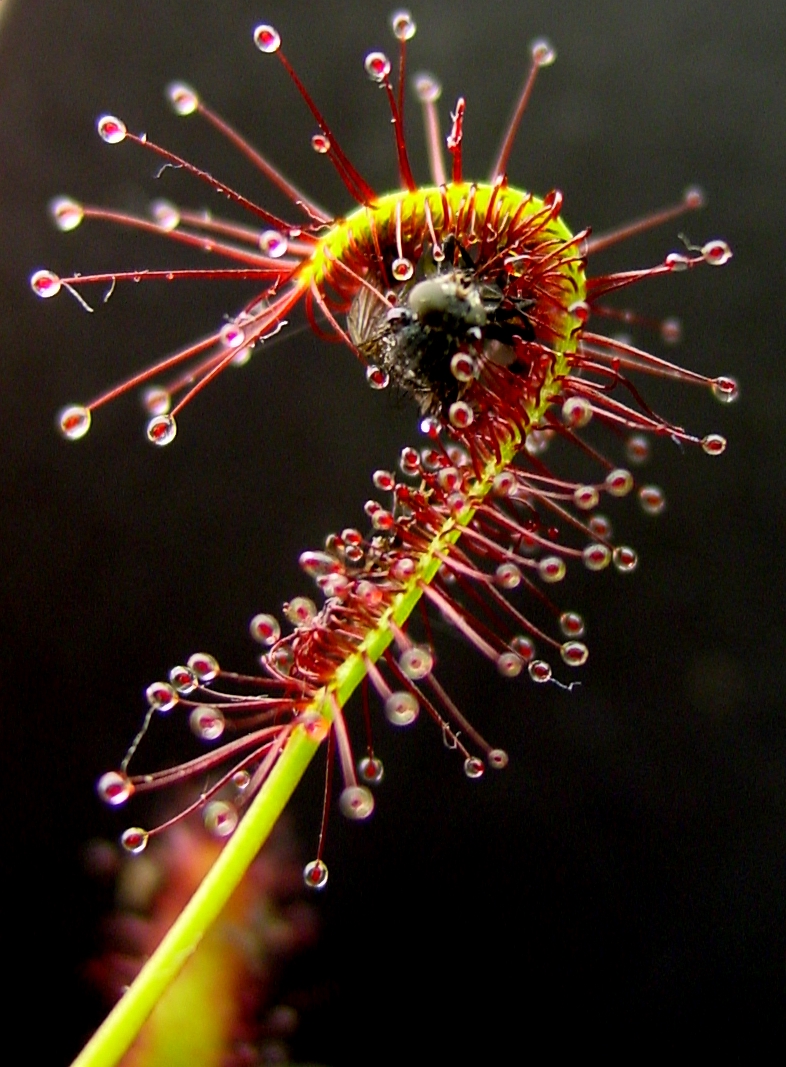
If you’re new to carnivorous plants and looking for the best species to start with in an Indian home, Drosera capensis — the Cape Sundew — is the answer. It’s forgiving, fast-growing, produces offsets readily, and flowers prolifically. More importantly, it genuinely thrives in the conditions that exist in most Indian homes.
Why Drosera Works in India
Drosera capensis originates from the Cape region of South Africa — a climate with warm summers, mild winters, and moderate humidity. Indian conditions aren’t dramatically different, particularly along the coasts. Unlike Venus Fly Traps, Cape Sundews do not require a cold winter dormancy. They grow year-round, which means no refrigerator tricks and no annual near-death experiences for the plant or its owner.
The Sticky Trap Mechanism
Where Venus Fly Traps snap shut and Nepenthes drown their prey in pitchers, Sundews use a different strategy: sticky mucilage on the tips of their tentacles. Insects land on what looks like dewdrops (giving the genus its name) and are unable to escape. The tentacles slowly curl around the prey over hours, maximising contact with digestive enzymes. It’s slower and less dramatic than a snap trap but extremely effective.
A healthy Drosera in a sunny Chennai window will catch plenty of fungus gnats, fruit flies, and small moths on its own.
Basic Care
Water
Same rule as all carnivorous plants: rainwater or RO only. Keep the pot sitting in 1–2 cm of water in a tray at all times. D. capensis is more tolerant of brief dry periods than Dionaea, but sustained dryness will cause dieback.
Light
Three to four hours of direct sunlight daily produces the best colour — healthy plants turn deep red in strong light, a reliable indicator of good growing conditions. Under lower light they stay green and grow slower, but won’t die. A window or balcony with morning sun is ideal.
Soil
Sphagnum peat and perlite, 1:1. No fertiliser, no garden soil. Same rules as all carnivorous plants.
No Dormancy Required
Leave it alone year-round. It will slow down slightly in cooler months but never fully go dormant. This is the biggest practical advantage over Dionaea for Indian growers.
Propagation — Where It Gets Fun
Drosera capensis is one of the easiest carnivorous plants to propagate:
- Leaf pullings — pull a leaf at the base and lay it flat on moist peat. Tiny plantlets appear in 4–6 weeks.
- Root cuttings — cut a piece of root and bury it shallowly in peat. Works reliably.
- Self-seeding — plants flower freely and set seed. Scatter seed on damp peat and you’ll have dozens of seedlings within a month.
Other Drosera Species Worth Trying
Once comfortable with D. capensis, these species also do well in Indian conditions:
- D. spatulata — tiny, rosette-forming, prolific self-seeder
- D. burmannii — native to parts of India, extremely fast trapping response
- D. indica — annual species, native to India, grows along streams in monsoon areas
Sundews are the entry point to carnivorous plants that most people should start with — easy enough to be reliably successful, interesting enough that you won’t get bored of them.