Overview & Taxonomy
Nepenthes ampullaria is a lowland tropical species native to Southeast Asia, particularly Borneo, Sumatra, and Peninsular Malaysia. It is taxonomically unique within the genus due to its detritivorous adaptation, relying heavily on falling organic debris rather than insects.
Morphology & Growth Habit
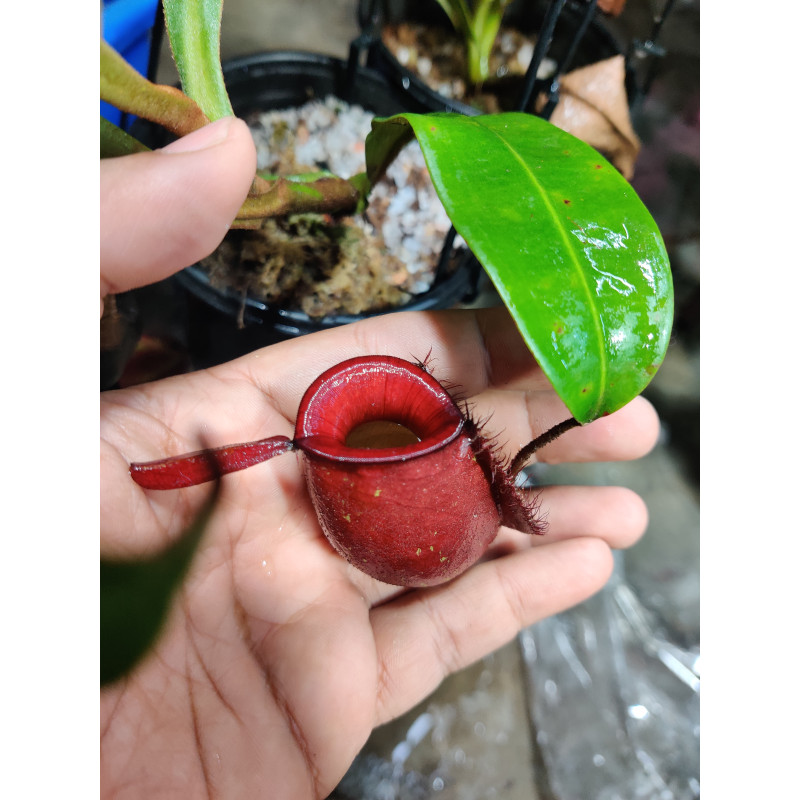
Produces squat, rounded pitchers with reduced peristome development.
Pitchers are predominantly basal, forming dense colonies across the substrate.
Leaves are broad, thin, and adapted for shaded understory environments.
“Red Pure” variant shows uniform anthocyanin-rich pigmentation, indicating strong genetic stability.
Ecological Adaptation
Unlike most Nepenthes, ampullaria specializes in leaf litter capture.
Pitchers often have lids reflexed backward, facilitating debris accumulation.
Microbial communities inside pitchers assist in nutrient breakdown.
Demonstrates mutualistic ecological interactions with invertebrates.
Climate Requirements (Indian Context 🌏)
Temperature: 24–34°C (ideal for Chennai, Kerala, coastal regions)
Humidity: 70–90%
Light: Bright indirect / filtered sunlight (avoid harsh noon sun)
Excellent candidate for lowland greenhouse or indoor grow tents
Growing Media (Indian Practical Mix 🌿)
Recommended mix:
Coco chips (washed, low EC)
Sphagnum moss (New Zealand / Chile preferred)
Perlite / charcoal for aeration
Avoid peat-heavy mixes in hot climates due to compaction.
Watering & Feeding 💧
Use RO / rainwater / low TDS (<100 ppm)
Keep media moist, not waterlogged
Feeding optional — leaf litter naturally supplements nutrition
Special Features ⭐
One of the few detritivorous Nepenthes
Carpet-forming — excellent for display trays
Stable coloration in “Red Pure” line
Highly tolerant compared to highland species
Propagation & Growth Rate 🌱
Moderate growth rate in stable humidity
Easily propagated via basal shoots and stem cuttings
Tissue culture widely used for maintaining pure lines
Conservation Notes 🌍
Habitat loss due to deforestation remains a concern
Cultivation reduces pressure on wild populations
Always prefer nursery-grown plants (like CPI mission 💚)
References 📚
Clarke, C. (2001). Nepenthes of Sumatra and Peninsular Malaysia
McPherson, S. (2009). Pitcher Plants of the Old World
https://www.carnivorousplants.org
https://powo.science.kew.org
🏷️ Notes (Internal + Tags)
Lowland specialist; detritivore; stable red line; beginner-friendly for humid climates; terrarium suitable



 Security policy
 Delivery policy
 Return policy