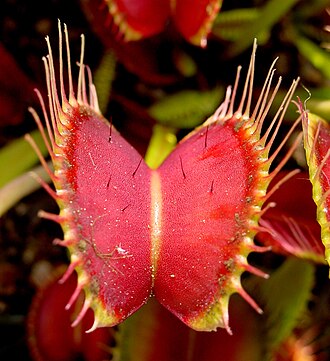
The Venus flytrap has a problem with its own fame. It’s the most recognisable carnivorous plant on earth — the one everyone knows from nature documentaries, the one people reach for first at a plant market. And because of that fame, it’s also the plant most frequently killed by well-meaning beginners given entirely the wrong information.
If your Venus flytrap has died, or is dying, the cause is almost certainly one of five things. This is not an exaggeration. After years of working with carnivorous plant growers across India, the same problems appear over and over — and they’re all fixable.
Problem 1: You Are Using Tap Water
This is the most common killer of Venus flytraps in India, full stop. Indian tap water — whether municipal or borewell — contains dissolved minerals: calcium, magnesium, chlorine, fluoride, sodium. These are harmless to humans and to most plants. To a Venus flytrap, they are toxic.
The reason lies in where Venus flytraps come from. They’re native to a very small area of North and South Carolina in the United States — a coastal bog region with some of the most mineral-poor, acidic, soft water on the continent. Rainwater there carries virtually nothing. The plant has evolved over millions of years in that environment and has no mechanism for handling mineral load.
When you water a flytrap with tap water, those minerals accumulate in the substrate with every watering. Within a few weeks or months, the concentration reaches a point where root cells can no longer function, and the plant begins to decline — traps blackening, new growth stopping, the whole plant slowly collapsing.
The fix: switch to rainwater, RO filtered water, or distilled water immediately. If you catch the problem early enough, the plant will often recover within a few weeks in fresh clean substrate. During the Indian monsoon, collect rainwater. A household RO filter produces water with TDS below 50 ppm — well within the safe range.
Problem 2: The Soil Mix Is Wrong
A Venus flytrap sold in standard potting mix is already in trouble. Standard potting soil is nutrient-rich, often pH-adjusted to neutral, and may contain slow-release fertiliser. For most plants, this is right. For a flytrap, it’s lethal.
The correct substrate is equal parts peat moss and perlite, with nothing added. No compost, no fertiliser, no sand from a construction site (it contains limestone). Just washed peat and horticultural perlite, mixed and watered with rainwater before planting.
If you receive a plant in the wrong substrate, repot it. Gently rinse the roots under room-temperature distilled water to remove as much of the old mix as possible, then settle it into the correct substrate. It’ll sulk for a week or two, but most healthy flytraps recover from a careful repot.
Problem 3: Not Enough Light
Venus flytraps are bog plants that grow in open, sunny Carolina savannas. They want a minimum of four to six hours of direct sunlight daily, and they perform best with more. A windowsill with only indirect light, or a shaded balcony, isn’t enough.
In India, summer sun is intense enough that you need to be careful about midday exposure on the hottest days — give them strong morning sun and some afternoon shade in April and May. For the rest of the year, as much sun as possible is the goal.
Under good light, a flytrap is compact with wide, upright traps in deep red and green. Under poor light, it stretches — long floppy petioles reaching toward the light source, small pale traps that rarely colour up. The stretched look is the plant’s way of telling you it needs to move.
Problem 4: Triggering the Traps Too Often
Every enthusiast does this at first — pressing the trigger hairs to watch the trap snap shut, then doing it again, then showing visitors. It’s genuinely impressive. But each closure costs the plant real metabolic energy, and each trap can only open and close a limited number of times before it blackens and dies.
A trap repeatedly triggered without catching prey will eventually give up. This isn’t a disaster — the plant grows new traps — but consistently over-triggering weakens it over time.
Let the plant catch its own food. In an outdoor Indian setting, ants, small flies, and other insects will find their way into the traps without any help from you. One small insect per trap every two to three weeks is plenty.
Problem 5: Mishandling Dormancy
Venus flytraps are temperate plants with a genuine winter dormancy requirement. In their native habitat, winter temperatures drop near-freezing and the plant rests for roughly three months. Without this rest, the plant slowly exhausts itself over one to two years, even if all other conditions are correct.
In most of India, you can’t provide outdoor freezing temperatures — but you can simulate a mild dormancy:
- From November to February, move the plant to the coolest available location — a north-facing balcony, a low shelf near an exterior wall.
- Reduce watering to keep the substrate just barely moist.
- Don’t feed during this period.
- Allow smaller traps or partial browning — this is normal dormancy behaviour, not death.
In February or March, move it back into full light and resume regular watering. The plant will burst back into growth, often producing its most vigorous traps immediately after dormancy.
On Tissue Cultured Venus Flytraps
Tissue cultured Venus flytraps offer a meaningful advantage over market-stall plants that have been sitting in inappropriate soil under fluorescent lights for weeks. A TC flytrap arrives in sterile, pathogen-free condition — no fungal rot waiting in the substrate, no root nematodes, no hidden infections.
When it transitions to life outside the lab, the traps may be smaller and softer than they’ll eventually become — this is adjustment, not weakness. Within four to six weeks of proper care, these plants are typically indistinguishable from field-grown specimens, and often outperform them because they started without any biological baggage.
The Short Version
Venus flytraps die in India for the same reasons everywhere: wrong water, wrong soil, wrong light, too much human interaction, and missed dormancy. Address all five and you’ll find these plants are genuinely easy to keep — not the fragile curiosities they’re sometimes made out to be, but robust little hunters that will catch their own food and outlast most of the other plants on your balcony.
Get the water right first. Everything else follows.