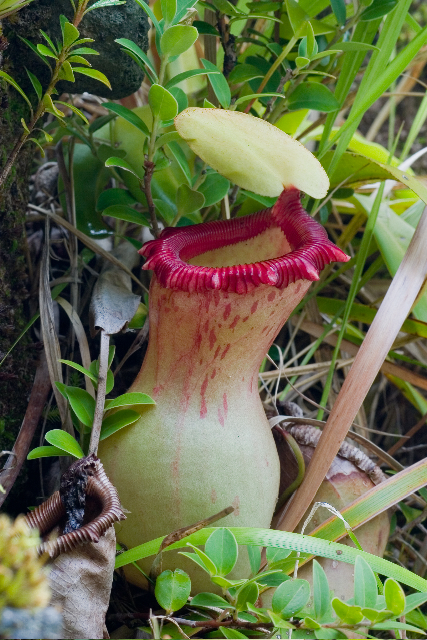
There is a moment every Nepenthes grower remembers — the first time a fresh pitcher unfurls, peels back its lid, and reveals that hollow, fluid-filled trap. It feels almost impossibly exotic. And yet, for those of us growing these plants across peninsular India, that moment happens regularly, reliably, and with far less drama than the internet would have you believe.
Nepenthes — tropical pitcher plants — have a reputation for being difficult. That reputation is largely undeserved, and most of it comes from growers in temperate climates who are genuinely fighting their weather. If you are in Tamil Nadu, Kerala, Karnataka, Andhra Pradesh, Goa, or West Bengal, the climate is already closer to Borneo than to Britain. You have a natural head start.
Understanding What Nepenthes Actually Want
Most species available in India come from lowland and intermediate elevations across Malaysia, Borneo, the Philippines, and India’s own northeast — places that share a lot with the Indian climate: high humidity, warm temperatures, bright but filtered light, and rainfall that is both heavy and well-drained.
They don’t grow in nutrient-rich soil. In the wild, Nepenthes cling to mossy cliff faces, ultramafic ridgelines, and heath forest edges — places where the soil is waterlogged, highly acidic, and almost devoid of nitrogen. The pitcher is their answer to that — a trap that digests insects to make up for what the soil cannot provide.
This is the most important thing to internalise: Nepenthes do not need feeding, fertilising, or any chemical supplement. They need the right substrate, clean water, good humidity, and reasonable light. That is genuinely it.
Choosing the Right Species for Your Location
Lowland Species (best for most of India)
If you live in coastal or peninsular India — Chennai, Kochi, Mangalore, Visakhapatnam — lowland species are your starting point. Nepenthes mirabilis, N. alata, N. ventricosa, and a wide range of lowland hybrids thrive between 22°C and 35°C, tolerate Indian humidity well, and produce pitchers freely even during summer.
Intermediate Species (elevated regions)
If you’re in Coorg, Ooty, Munnar, Shillong, or the Nilgiris, intermediate species open up beautifully. Nepenthes maxima, N. truncata, and intermediate hybrids appreciate the cooler nights these elevations provide.
Highland Species (for the serious grower)
Nepenthes rajah, N. villosa, and the extreme highland species require cool nights below 20°C and consistent humidity — achievable in a climate-controlled grow space but not a first plant for most growers.
For beginners, a lowland hybrid is always the right starting point.
The Substrate: Getting This Right Changes Everything
Standard potting mix will kill a Nepenthes — it’s too nutrient-rich and the pH is wrong. What they need is an airy, low-nutrient, acidic mix:
- 60% long-fibre sphagnum moss — the gold standard substrate. Holds moisture, stays aerated, naturally acidic.
- 30% perlite — improves drainage and airflow around roots.
- 10% orchid bark — optional but adds structural support.
Do not use regular potting soil, coco peat alone, or any mix that contains fertiliser. Even a small amount of added nutrients can burn Nepenthes roots.
Water: The One Thing That Cannot Be Compromised
This is where most beginners lose their plants. Nepenthes can’t tolerate the minerals in tap water — chlorine, fluoride, calcium, and magnesium accumulate in the substrate and cause root damage over time.
Use one of these, always:
- Rainwater — ideal and free. Collect and store in a clean covered container.
- RO filtered water — a household RO unit produces suitable water (TDS below 50 ppm).
- Distilled water — technically perfect but expensive at scale.
India’s monsoons are generous. A simple roof collection setup can supply more than enough water for the rest of the year.
Light: Bright but Not Scorched
Nepenthes want bright, filtered light for 10–14 hours a day. Direct afternoon sun in most of India — especially the 12–3pm window — is too intense and will bleach leaves before the plant can produce pitchers.
The ideal position gets morning sun until around 11am, then bright shade or filtered light. A north or east-facing balcony, under 50% shade cloth, or near a large window all work well.
Humidity: India’s Natural Advantage
Most of India is naturally humid enough for lowland Nepenthes to pitcher freely without artificial help. Coastal regions routinely sit at 65–80% relative humidity — perfectly within the range these plants want.
In drier inland cities or air-conditioned spaces, mist the plants in the evening or place them on a pebble tray with water.
A Note on Tissue Cultured Nepenthes
Many of the best Nepenthes available in India today are tissue cultured — each plant genetically identical to a proven, healthy mother, free of the root diseases and soil-borne pathogens that frequently come with cuttings traded through informal plant networks.
They may look compact and slightly tender when they first arrive — that’s normal for any plant transitioning from a controlled environment to the real world. Give them two to four weeks in higher humidity and indirect light, and they establish rapidly. Within a season, a well-handled TC Nepenthes often outperforms conventionally propagated plants precisely because it started completely clean.
Feeding: Less Than You Think
A Nepenthes on a balcony in India will catch enough insects on its own — ants, small flies, and moths find the nectar on the pitcher rim irresistible. If you want to supplement, one small insect per pitcher every two to three weeks is plenty. Never use fertiliser.
Common Problems and What They Mean
- Pitchers not forming: Almost always humidity or light. Check both first.
- Yellowing lower leaves: Normal ageing. Only worry if new growth is yellow too.
- Black pitcher tips: Physical damage or low humidity — not disease.
- Root rot: Overwatering in poorly draining substrate — repot into the correct mix.
The Short Version
Clean water. An airy, nutrient-free substrate. Bright filtered light. Reasonable humidity. That’s the entire care regime for a Nepenthes in India. You’re not battling the climate — you’re working with it. Start with a lowland hybrid, get the water right, and the rest follows.