Description
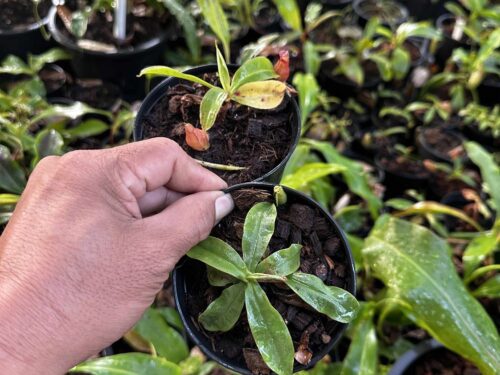
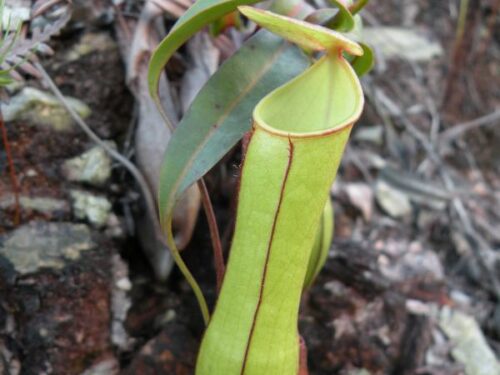
Size: S (Small) — A juvenile plant, 3–5 leaf node stage, producing its first transitional pitchers. The fangs are already visible and the characteristic peristome ribbing is evident even at this size. Perfect entry point for a species that can be expensive to acquire as a mature specimen.
🌿 About this plant
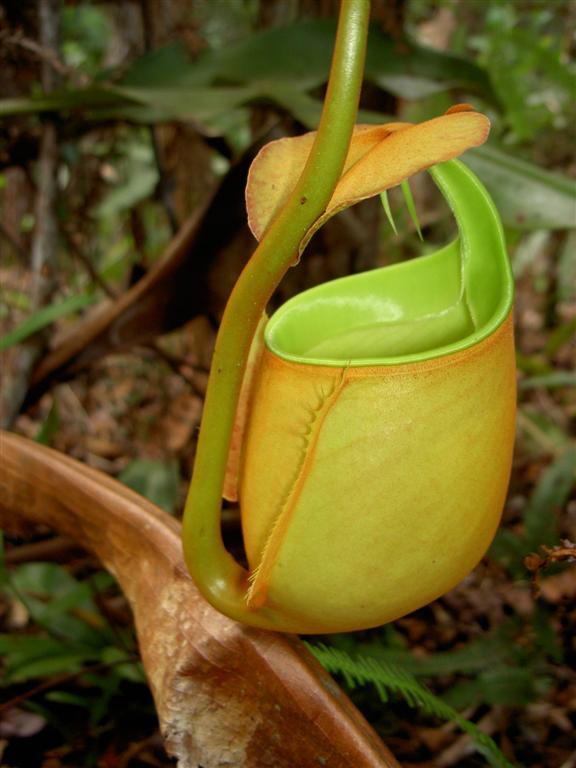
Nepenthes bicalcarata — the Fanged Pitcher Plant — is one of the most dramatic and scientifically fascinating Nepenthes species in existence. Named for the pair of sharp downward-pointing fangs on the underside of the pitcher lid, it is the only Nepenthes known to have a mutualistic relationship with a specific ant species (Camponotus schmitzi) that lives inside the pitcher fluid and assists with prey processing.
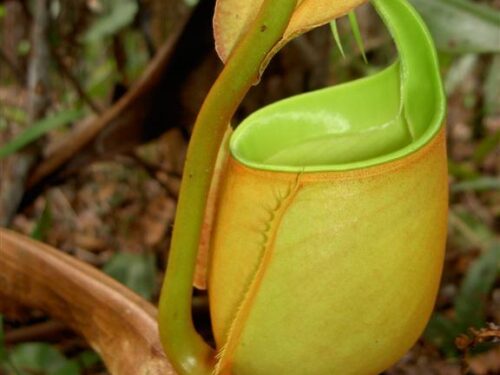
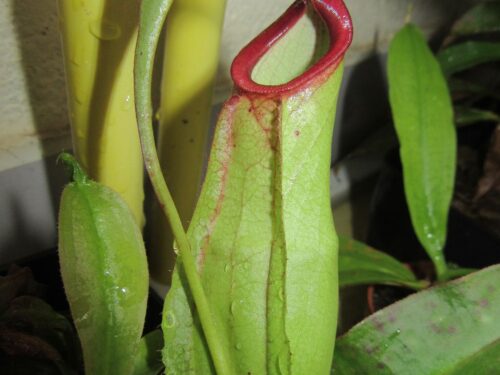
In cultivation, the fangs are the first thing every visitor notices — they make the plant look prehistoric and predatory in a way no other pitcher plant achieves. The peristome (pitcher rim) is wide, glossy, and ribbed, designed to be slippery when wet to knock insects off balance into the pitcher below.
This Orange clone has been selected for the warm orange-red colouration of its pitchers. Young pitchers open lime green and transition over 2–4 weeks to the characteristic orange as the peristome colours up. Lower pitchers are broader and more globular; upper pitchers elongate and narrow slightly.
✨ Why collectors choose it
- The iconic 'fanged' pitcher plant — prehistoric, predatory look
- Only Nepenthes with a true ant mutualism (Camponotus schmitzi)
- Small juvenile — an affordable entry to an expensive species
📊 Care at a glance
| Parameter | What it likes |
|---|---|
| Climate type | Lowland |
| Grower level | Intermediate |
| Wild origin | Borneo peat swamp forest |
| Light | High light required for best colouration — at least 6 hours of bright indirect light, with morning direct sun ideal. Under lower light, pitchers remain green and smaller. |
| Water | Distilled or RO water. Keep medium constantly moist. Bicalcarata is a swamp-edge species in nature and tolerates wetter conditions than most Nepenthes. Do not allow to dry out between waterings. |
| Humidity | 80–95% RH preferred. This is the most demanding aspect of bicalcarata culture — it needs greenhouse or terrarium conditions in most of inland India. On the Kerala and coastal Karnataka coast, outdoor growing in shade is feasible year-round. |
| Temperature | 28–38 °C days, 23–28 °C nights. A true lowland species — growth slows significantly below 22 °C and stops below 18 °C. Not suitable for North Indian winters without heating. |
| Growing medium | Pure long-fibre sphagnum, or a mix of sphagnum and small bark chips (70:30). Repot every 12–18 months as this is a fast-growing species that fills containers quickly. |
🌡️ Detailed care
- ☀️ Light: High light required for best colouration — at least 6 hours of bright indirect light, with morning direct sun ideal. Under lower light, pitchers remain green and smaller.
- 💧 Water: Distilled or RO water. Keep medium constantly moist. Bicalcarata is a swamp-edge species in nature and tolerates wetter conditions than most Nepenthes. Do not allow to dry out between waterings.
- 🌫️ Humidity: 80–95% RH preferred. This is the most demanding aspect of bicalcarata culture — it needs greenhouse or terrarium conditions in most of inland India. On the Kerala and coastal Karnataka coast, outdoor growing in shade is feasible year-round.
- 🌡️ Temperature: 28–38 °C days, 23–28 °C nights. A true lowland species — growth slows significantly below 22 °C and stops below 18 °C. Not suitable for North Indian winters without heating.
- 🪴 Medium: Pure long-fibre sphagnum, or a mix of sphagnum and small bark chips (70:30). Repot every 12–18 months as this is a fast-growing species that fills containers quickly.
🔬 Grower notes
Note: N. bicalcarata is a protected species (CITES Appendix II). All plants are sourced from legally licensed tissue culture propagation, not wild collection. A phytosanitary certificate can be provided on request for inter-state transport.
🌱 Establishing your plant in India
- 🫧 Week 1: unbox immediately, sit the pot in a bright, shaded, humid spot and let the plant settle for 3–4 days before any repotting
- 🪴 Repotting: only if needed — use fresh long-fibre sphagnum or a sphagnum-perlite mix in a plastic pot with drainage; never garden soil or fertiliser
- 💦 Water: keep the medium damp with rain / RO / distilled water; a 5–10 mm tray of water is fine in hot weather
- 🌬️ Airflow: once acclimatised, avoid a permanently sealed box — moving air improves pitcher formation
- 🐜 Feeding: optional — a few small insects per month once pitchers are active; no fertiliser in the medium
📦 What you will receive
- 1 established, actively-growing plant — one clump per order (sold individually)
- Bag-incubated, then hardened to open-air growth before dispatch
- At least 1–2 live pitchers or forming pitchers at the time of packing
- Printed India-specific Nepenthes care card
🚚 Shipping & order policy
🇮🇳 Ships across India. Prepaid orders only — Cash on Delivery is disabled because carnivorous plants do not survive the darkness and dehydration of a return transit cycle. Orders are packed in batches alongside live lab work; typical processing time is 2–6 weeks depending on the plant and the season. We pause dispatch during peak monsoon (December–January). Every plant is a unique living specimen — the one you receive will vary slightly from the photographs.
Reviews
There are no reviews yet.