Description
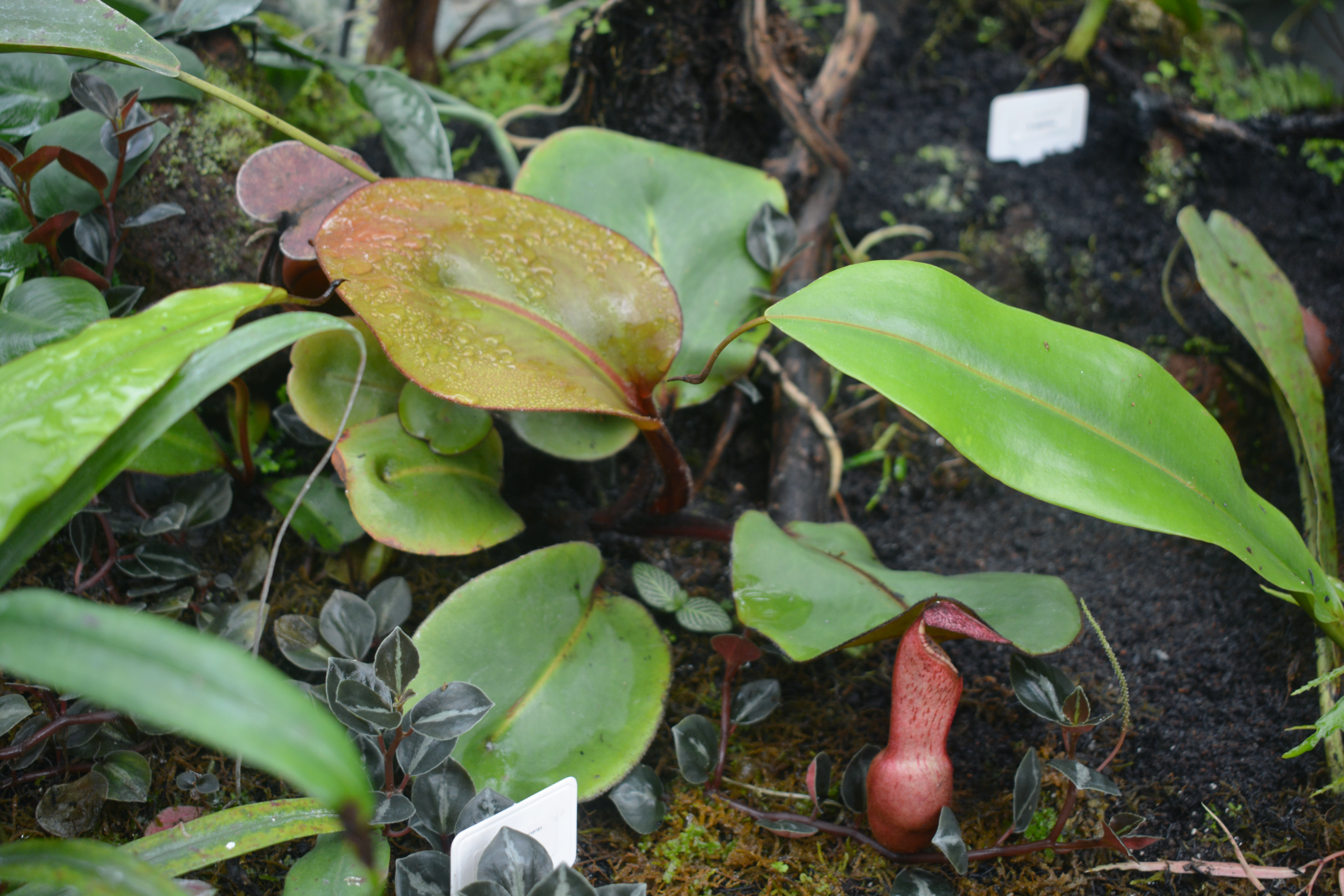
Nepenthes clipeata — the Shield-leafed Pitcher Plant — is one of the most critically endangered Nepenthes species in the world, restricted in nature to a single cliff face in Kalimantan, Indonesia. Tissue culture propagation is the only ethical way to bring this species into cultivation, and all plants offered here are legally propagated ex-situ clones.
🌿 About this plant
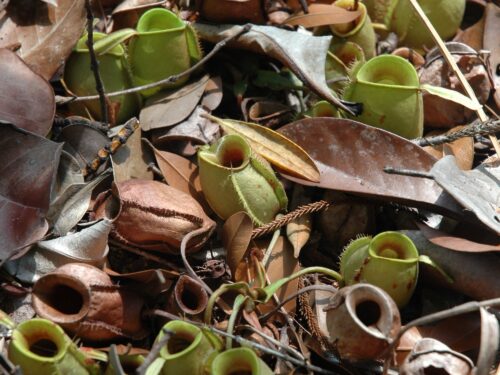
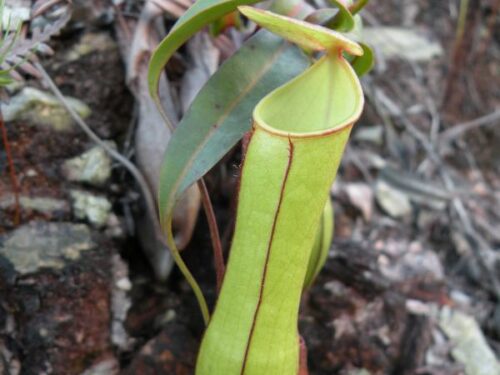
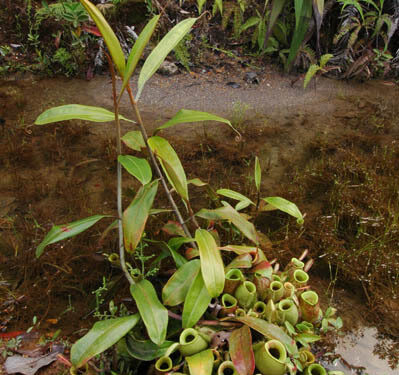
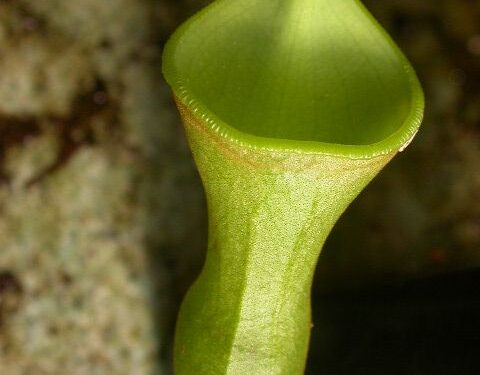
The name 'clipeata' (shield-bearing) refers to the distinctive large, heart-shaped leaves that clasp the stem at the base — a feature unlike any other Nepenthes. The pitchers themselves are large, elongated, and dramatically marked with red or burgundy in the upper half. The peristome is wide and prominently ribbed, deeply red in good light.
This Female XL specimen is a mature plant with a confirmed sexual identity — important for growers interested in seed production when paired with a male clone. The female flowers of clipeata are distinctive and rarely seen in cultivation.
This is a collector's specimen and priced as such. We strongly recommend prior experience with lowland Nepenthes before acquiring clipeata. We are happy to provide detailed growing guidance via WhatsApp after purchase.
✨ Why collectors choose it
- Critically endangered — one of the rarest Nepenthes in cultivation
- Distinctive shield-shaped clasping leaves; large red-marked pitchers
- Confirmed female XL specimen — ex-situ propagated, never wild-collected
📊 Care at a glance
| Parameter | What it likes |
|---|---|
| Climate type | Lowland |
| Grower level | Advanced |
| Wild origin | Single cliff, Kalimantan (Borneo) |
| Light | High light essential — at least 6–8 hours of bright indirect or direct morning sun. Under low light, the dramatic colouration fades and pitcher production slows. Clipeata grows on near-vertical cliff faces in full sun in nature; it tolerates far more light than most collector assume. |
| Water | Distilled or pure RO water only. Keep medium consistently moist. Clipeata grows in minimal substrate on cliff faces in nature but the roots must never dry out completely. |
| Humidity | 80–95% RH. This is a demanding species — a greenhouse, climate cabinet, or humid growing chamber is strongly recommended for inland India. Coastal Kerala and Andaman growing is theoretically possible outdoors in the monsoon season. |
| Temperature | 28–36 °C days, 22–28 °C nights. True lowland species. Will not tolerate temperatures below 18 °C. |
| Growing medium | Coarse, open mix — equal parts long-fibre sphagnum, perlite, and medium bark chips. Good aeration is as important as moisture retention for this species. |
🌡️ Detailed care
- ☀️ Light: High light essential — at least 6–8 hours of bright indirect or direct morning sun. Under low light, the dramatic colouration fades and pitcher production slows. Clipeata grows on near-vertical cliff faces in full sun in nature; it tolerates far more light than most collector assume.
- 💧 Water: Distilled or pure RO water only. Keep medium consistently moist. Clipeata grows in minimal substrate on cliff faces in nature but the roots must never dry out completely.
- 🌫️ Humidity: 80–95% RH. This is a demanding species — a greenhouse, climate cabinet, or humid growing chamber is strongly recommended for inland India. Coastal Kerala and Andaman growing is theoretically possible outdoors in the monsoon season.
- 🌡️ Temperature: 28–36 °C days, 22–28 °C nights. True lowland species. Will not tolerate temperatures below 18 °C.
- 🪴 Medium: Coarse, open mix — equal parts long-fibre sphagnum, perlite, and medium bark chips. Good aeration is as important as moisture retention for this species.
🌱 Establishing your plant in India
- 🫧 Week 1: unbox immediately, sit the pot in a bright, shaded, humid spot and let the plant settle for 3–4 days before any repotting
- 🪴 Repotting: only if needed — use fresh long-fibre sphagnum or a sphagnum-perlite mix in a plastic pot with drainage; never garden soil or fertiliser
- 💦 Water: keep the medium damp with rain / RO / distilled water; a 5–10 mm tray of water is fine in hot weather
- 🌬️ Airflow: once acclimatised, avoid a permanently sealed box — moving air improves pitcher formation
- 🐜 Feeding: optional — a few small insects per month once pitchers are active; no fertiliser in the medium
📦 What you will receive
- 1 established, actively-growing plant — one clump per order (sold individually)
- Bag-incubated, then hardened to open-air growth before dispatch
- At least 1–2 live pitchers or forming pitchers at the time of packing
- Printed India-specific Nepenthes care card
🚚 Shipping & order policy
🇮🇳 Ships across India. Prepaid orders only — Cash on Delivery is disabled because carnivorous plants do not survive the darkness and dehydration of a return transit cycle. Orders are packed in batches alongside live lab work; typical processing time is 2–6 weeks depending on the plant and the season. We pause dispatch during peak monsoon (December–January). Every plant is a unique living specimen — the one you receive will vary slightly from the photographs.
Reviews
There are no reviews yet.