Description
Nepenthes gracilis — the Slender Pitcher Plant — is one of the most widespread and botanically important Nepenthes species in Southeast Asia, native from Borneo and Sumatra through peninsular Malaysia and into southern Thailand. Its extraordinary range attests to its adaptability: it grows from sea level peat swamps to mountain roadsides, in full sun and dappled shade, in pure sphagnum and road cut mineral soil.
🌿 About this plant
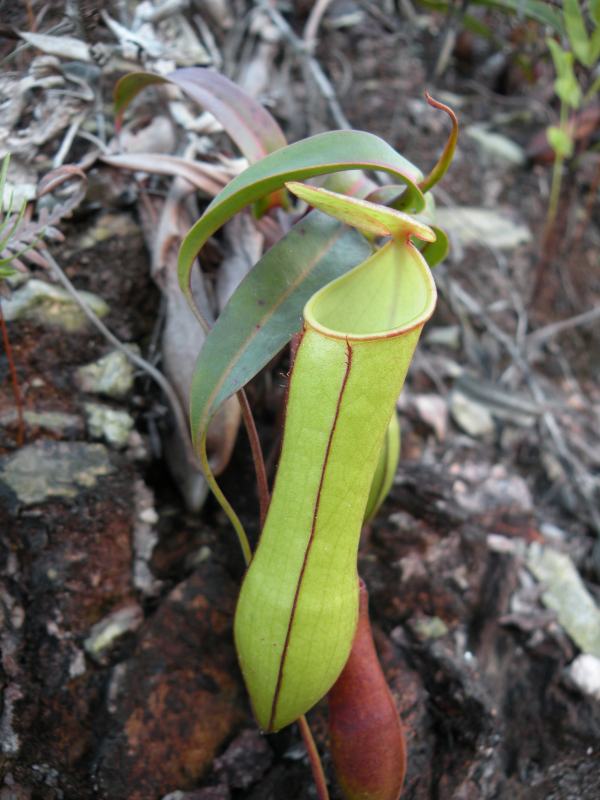
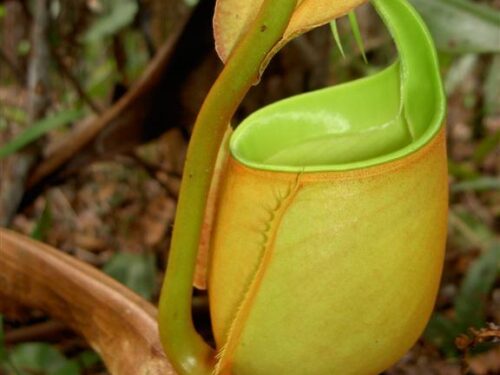
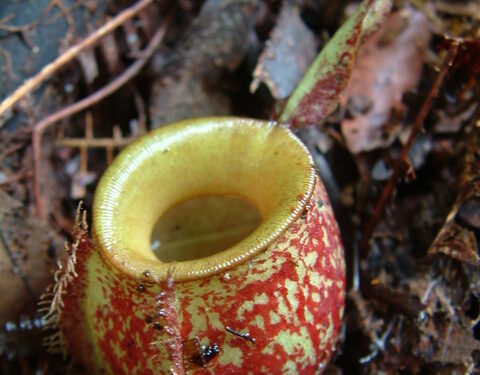
The Regular form offered here represents the typical green-to-mottled red coloration of the wild type. The pitchers are slender and elegant — long, narrowly cylindrical, with a small lid and a distinctive small wing running along the pitcher front. Each pitcher is neatly proportioned and produced in abundance on the climbing vine.
Gracilis is among the fastest-growing Nepenthes in cultivation. In good conditions, it produces a new leaf and associated pitcher every 2–3 weeks. The plant climbs vigorously, making it suitable for a hanging basket or trained up a support where the vine can drape dramatically.
An excellent species for the beginner to intermediate grower who wants a vigorous, pitcher-prolific vine that fills a space rapidly. The climbing habit is best displayed in a hanging basket or on a tall shelf where the vine can cascade downward.
✨ Why collectors choose it
- The most widespread Nepenthes in SE Asia — extremely adaptable
- Slender elegant pitchers; new pitcher every 2–3 weeks
- Vigorous climber, ideal for a hanging basket
📊 Care at a glance
| Parameter | What it likes |
|---|---|
| Climate type | Lowland |
| Grower level | Easy |
| Wild origin | Borneo, Sumatra, Malaysia, S. Thailand |
| Light | High light preferred — direct morning sun produces the best colouration. Will grow in moderate indirect light but pitchers remain smaller and greener. |
| Water | Distilled or RO water. Can be tray-watered or top-watered. Tolerates slightly wetter conditions than many Nepenthes due to its swamp-edge natural habitat. |
| Humidity | 60–90% RH. One of the most humidity-tolerant species in the genus — grows in coastal India without any supplemental humidity in most seasons. |
| Temperature | 24–38 °C. Lowland species tolerant of high temperatures — will thrive on a humid coastal balcony or in a well-ventilated greenhouse in India. |
| Growing medium | Long-fibre sphagnum or peat-perlite. Not fussy about medium composition compared to more specialised species. Repot when the roots visibly escape the drainage holes. |
🌡️ Detailed care
- ☀️ Light: High light preferred — direct morning sun produces the best colouration. Will grow in moderate indirect light but pitchers remain smaller and greener.
- 💧 Water: Distilled or RO water. Can be tray-watered or top-watered. Tolerates slightly wetter conditions than many Nepenthes due to its swamp-edge natural habitat.
- 🌫️ Humidity: 60–90% RH. One of the most humidity-tolerant species in the genus — grows in coastal India without any supplemental humidity in most seasons.
- 🌡️ Temperature: 24–38 °C. Lowland species tolerant of high temperatures — will thrive on a humid coastal balcony or in a well-ventilated greenhouse in India.
- 🪴 Medium: Long-fibre sphagnum or peat-perlite. Not fussy about medium composition compared to more specialised species. Repot when the roots visibly escape the drainage holes.
🌱 Establishing your plant in India
- 🫧 Week 1: unbox immediately, sit the pot in a bright, shaded, humid spot and let the plant settle for 3–4 days before any repotting
- 🪴 Repotting: only if needed — use fresh long-fibre sphagnum or a sphagnum-perlite mix in a plastic pot with drainage; never garden soil or fertiliser
- 💦 Water: keep the medium damp with rain / RO / distilled water; a 5–10 mm tray of water is fine in hot weather
- 🌬️ Airflow: once acclimatised, avoid a permanently sealed box — moving air improves pitcher formation
- 🐜 Feeding: optional — a few small insects per month once pitchers are active; no fertiliser in the medium
📦 What you will receive
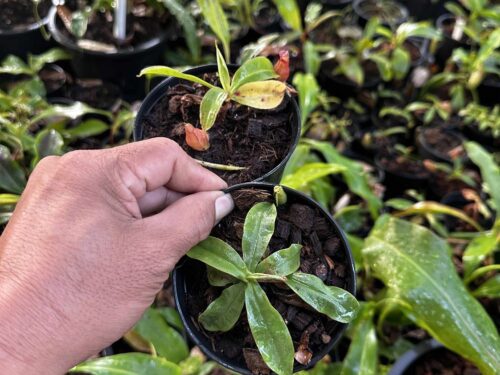
- 1 established, actively-growing plant — one clump per order (sold individually)
- Bag-incubated, then hardened to open-air growth before dispatch
- At least 1–2 live pitchers or forming pitchers at the time of packing
- Printed India-specific Nepenthes care card
🚚 Shipping & order policy
🇮🇳 Ships across India. Prepaid orders only — Cash on Delivery is disabled because carnivorous plants do not survive the darkness and dehydration of a return transit cycle. Orders are packed in batches alongside live lab work; typical processing time is 2–6 weeks depending on the plant and the season. We pause dispatch during peak monsoon (December–January). Every plant is a unique living specimen — the one you receive will vary slightly from the photographs.
Reviews
There are no reviews yet.