Description
Clone: Nepenthes veitchii Bario Candy Red × Bario Striped — C-form
🌿 About this plant
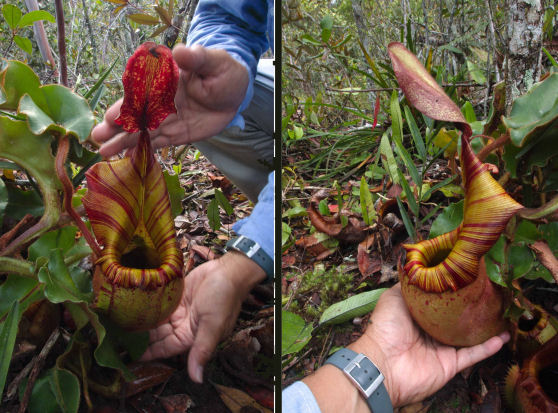
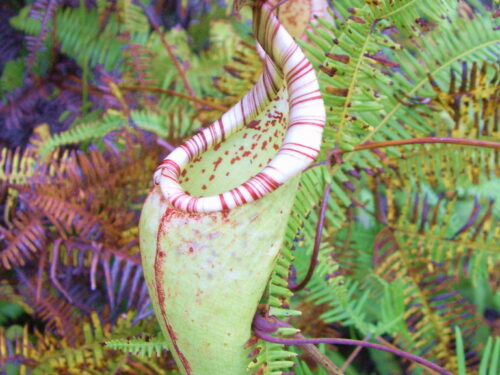
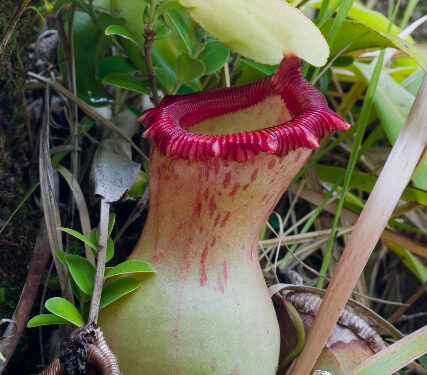
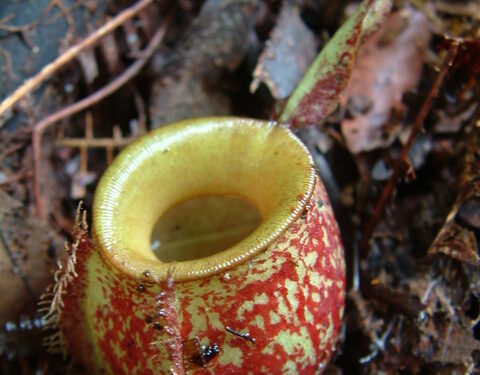
This is a second-generation N. veitchii cross pairing two exceptional Bario location forms: the Candy Red clone (with maximum red pigmentation in the peristome) and the Bario Striped clone (with characteristic red-and-cream vertical striping on the peristome). The C-form designation identifies the specific seedling selection from this cross.
N. veitchii is legendary in the collector community for its extraordinary peristome — the widest, most elaborately structured rim of any Nepenthes species. In the Bario location forms, this peristome reaches extraordinary dimensions, spanning nearly the full pitcher width, with prominent parallel ribs and intense colouration.
The Candy Red × Bario Striped cross represents an attempt to combine maximum colour intensity (from Candy Red) with the contrasting striping pattern (from Bario Striped) in a single plant. The C-form exhibited the best intermediate expression of this combination and was selected for propagation.
✨ Why collectors choose it
- Two elite veitchii Bario clones crossed: Candy Red × Bario Striped
- The widest, most elaborately ribbed peristome in the genus
- C-form seedling selection — one of the highest grades available in India
📊 Care at a glance
| Parameter | What it likes |
|---|---|
| Climate type | Intermediate–Highland |
| Grower level | Advanced |
| Wild origin | Hybrid (Bario, Borneo) |
| Light | Very high light — veitchii grows in full sun on Borneo cliff faces. Direct morning sun is strongly recommended for peristome colour development in this complex cross. |
| Water | Distilled or RO water. Keep medium consistently moist. Veitchii appreciates slightly drier conditions between waterings compared to many other Nepenthes. |
| Humidity | 70–85% RH. Intermediate-highland. Suitable for Bangalore plateau, Nilgiris, Coorg, and similar Indian locations. |
| Temperature | 18–28 °C. Intermediate range. Prefers distinct day-night temperature differential for optimum growth and maximum colouration. |
| Growing medium | Long-fibre sphagnum with 25–30% perlite addition for drainage. |
🌡️ Detailed care
- ☀️ Light: Very high light — veitchii grows in full sun on Borneo cliff faces. Direct morning sun is strongly recommended for peristome colour development in this complex cross.
- 💧 Water: Distilled or RO water. Keep medium consistently moist. Veitchii appreciates slightly drier conditions between waterings compared to many other Nepenthes.
- 🌫️ Humidity: 70–85% RH. Intermediate-highland. Suitable for Bangalore plateau, Nilgiris, Coorg, and similar Indian locations.
- 🌡️ Temperature: 18–28 °C. Intermediate range. Prefers distinct day-night temperature differential for optimum growth and maximum colouration.
- 🪴 Medium: Long-fibre sphagnum with 25–30% perlite addition for drainage.
🌱 Establishing your plant in India
- 🫧 Week 1: unbox immediately, sit the pot in a bright, shaded, humid spot and let the plant settle for 3–4 days before any repotting
- 🪴 Repotting: only if needed — use fresh long-fibre sphagnum or a sphagnum-perlite mix in a plastic pot with drainage; never garden soil or fertiliser
- 💦 Water: keep the medium damp with rain / RO / distilled water; a 5–10 mm tray of water is fine in hot weather
- 🌬️ Airflow: once acclimatised, avoid a permanently sealed box — moving air improves pitcher formation
- 🐜 Feeding: optional — a few small insects per month once pitchers are active; no fertiliser in the medium
📦 What you will receive
- 1 established, actively-growing plant — one clump per order (sold individually)
- Bag-incubated, then hardened to open-air growth before dispatch
- At least 1–2 live pitchers or forming pitchers at the time of packing
- Printed India-specific Nepenthes care card
🚚 Shipping & order policy
🇮🇳 Ships across India. Prepaid orders only — Cash on Delivery is disabled because carnivorous plants do not survive the darkness and dehydration of a return transit cycle. Orders are packed in batches alongside live lab work; typical processing time is 2–6 weeks depending on the plant and the season. We pause dispatch during peak monsoon (December–January). Every plant is a unique living specimen — the one you receive will vary slightly from the photographs.
Reviews
There are no reviews yet.