Description
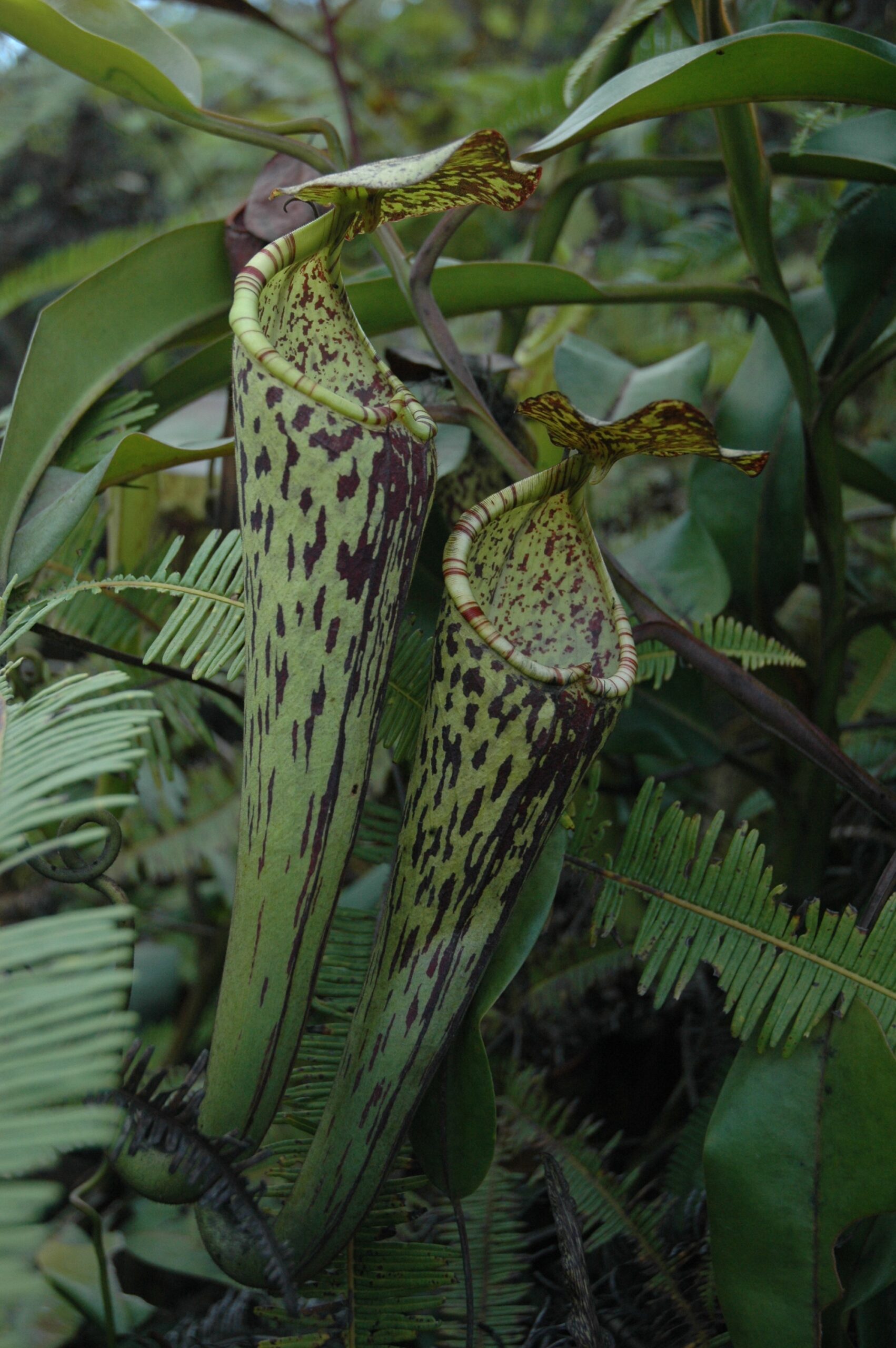
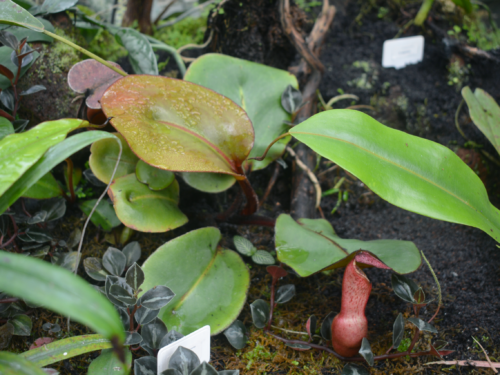
Nepenthes stenophylla — the Narrow-leafed Pitcher Plant — is an intermediate to highland species from the mountains of Borneo, prized in cultivation for its unusually elongated, strap-like leaves and the elegant, slender pitchers that develop along its climbing stem. The narrow leaves (stenophylla = narrow leaf) give the plant a distinctive, almost grass-like basal appearance that sets it apart immediately from broad-leafed Nepenthes.
🌿 About this plant
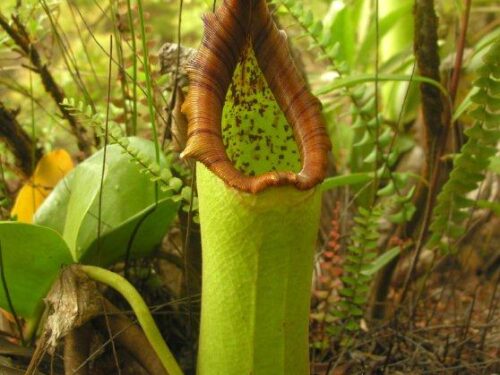
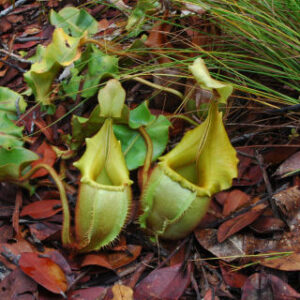
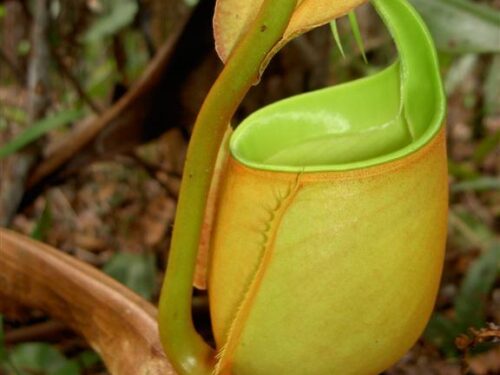
The pitchers of N. stenophylla are cylindrical and moderately sized, with a prominent peristome that develops rich red colouration in high light. The colour contrast between the green pitcher body and the dark red or maroon peristome is one of the most elegant colour combinations in the genus. Upper pitchers produced on the climbing stem tend to be narrower, more cylindrical, and even more richly coloured than lower pitchers.
This Female specimen is a confirmed female clone, important for growers interested in seed production when paired with a male clone of the same species or a compatible hybrid partner. The female flowers of stenophylla are attractive in their own right, produced on a tall spike above the foliage.
✨ Why collectors choose it
- Strap-like narrow leaves give a grass-like basal look
- Green pitcher body against a dark red ribbed peristome
- Confirmed female clone; prefers 15–20 °C nights
📊 Care at a glance
| Parameter | What it likes |
|---|---|
| Climate type | Intermediate–Highland |
| Grower level | Intermediate |
| Wild origin | Mountains of Borneo |
| Light | Bright indirect light, 5–8 hours. Some direct morning sun improves peristome colouration significantly. |
| Water | Distilled or RO water. Keep medium consistently moist. This highland-intermediate species appreciates slightly cooler water than true lowland species. |
| Humidity | 70–85% RH. Intermediate requirement — more demanding than lowland species but less than true highland. Suitable for Bangalore, Pune, Coorg, and similar intermediate-altitude Indian cities without supplemental cooling. |
| Temperature | 18–28 °C. Prefers cooler growing conditions, especially at night (ideally 15–20 °C nights for optimum growth). In hot Indian summers, grow under shade with high humidity to compensate for higher temperatures. |
| Growing medium | Long-fibre sphagnum with 20–30% perlite. The roots prefer cool, well-aerated, moist medium. Do not compact the growing mix around the stem. |
🌡️ Detailed care
- ☀️ Light: Bright indirect light, 5–8 hours. Some direct morning sun improves peristome colouration significantly.
- 💧 Water: Distilled or RO water. Keep medium consistently moist. This highland-intermediate species appreciates slightly cooler water than true lowland species.
- 🌫️ Humidity: 70–85% RH. Intermediate requirement — more demanding than lowland species but less than true highland. Suitable for Bangalore, Pune, Coorg, and similar intermediate-altitude Indian cities without supplemental cooling.
- 🌡️ Temperature: 18–28 °C. Prefers cooler growing conditions, especially at night (ideally 15–20 °C nights for optimum growth). In hot Indian summers, grow under shade with high humidity to compensate for higher temperatures.
- 🪴 Medium: Long-fibre sphagnum with 20–30% perlite. The roots prefer cool, well-aerated, moist medium. Do not compact the growing mix around the stem.
🌱 Establishing your plant in India
- 🫧 Week 1: unbox immediately, sit the pot in a bright, shaded, humid spot and let the plant settle for 3–4 days before any repotting
- 🪴 Repotting: only if needed — use fresh long-fibre sphagnum or a sphagnum-perlite mix in a plastic pot with drainage; never garden soil or fertiliser
- 💦 Water: keep the medium damp with rain / RO / distilled water; a 5–10 mm tray of water is fine in hot weather
- 🌬️ Airflow: once acclimatised, avoid a permanently sealed box — moving air improves pitcher formation
- 🐜 Feeding: optional — a few small insects per month once pitchers are active; no fertiliser in the medium
📦 What you will receive
- 1 established, actively-growing plant — one clump per order (sold individually)
- Bag-incubated, then hardened to open-air growth before dispatch
- At least 1–2 live pitchers or forming pitchers at the time of packing
- Printed India-specific Nepenthes care card
🚚 Shipping & order policy
🇮🇳 Ships across India. Prepaid orders only — Cash on Delivery is disabled because carnivorous plants do not survive the darkness and dehydration of a return transit cycle. Orders are packed in batches alongside live lab work; typical processing time is 2–6 weeks depending on the plant and the season. We pause dispatch during peak monsoon (December–January). Every plant is a unique living specimen — the one you receive will vary slightly from the photographs.
Reviews
There are no reviews yet.